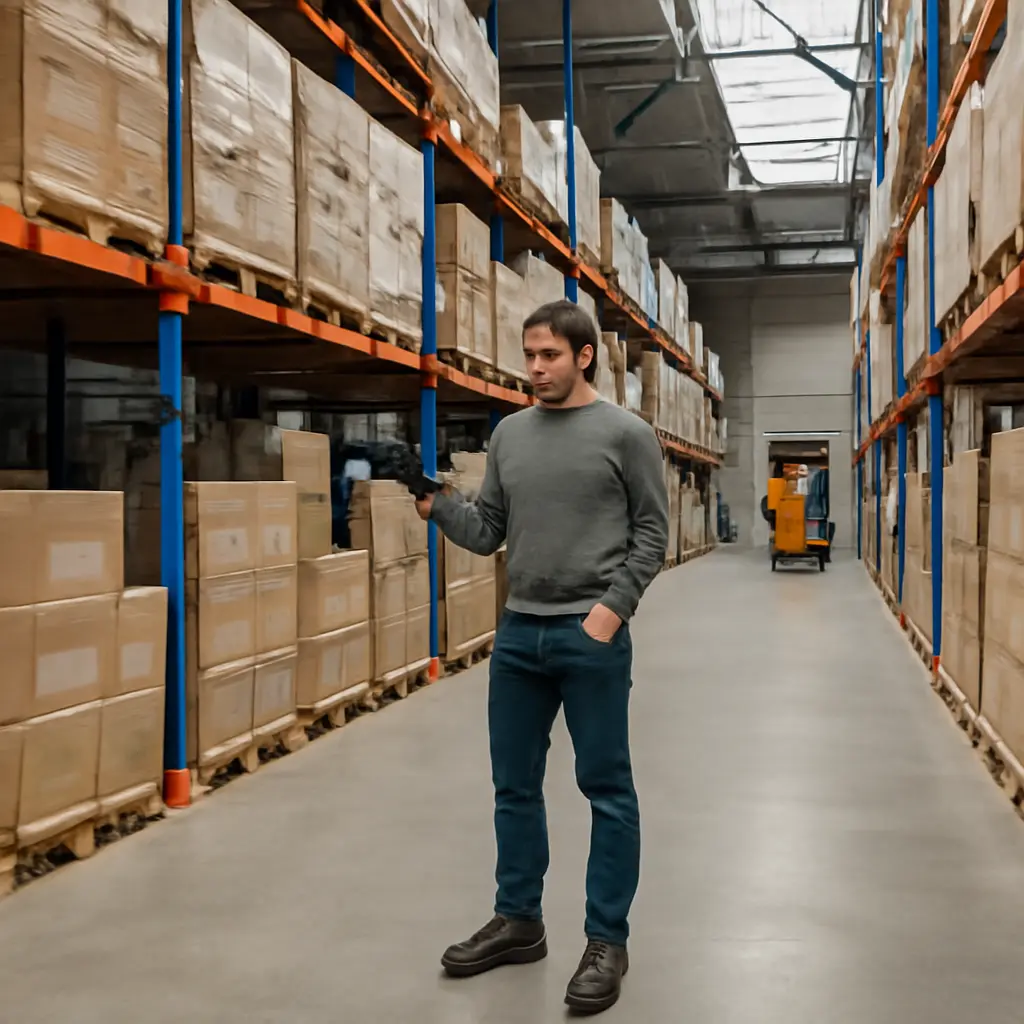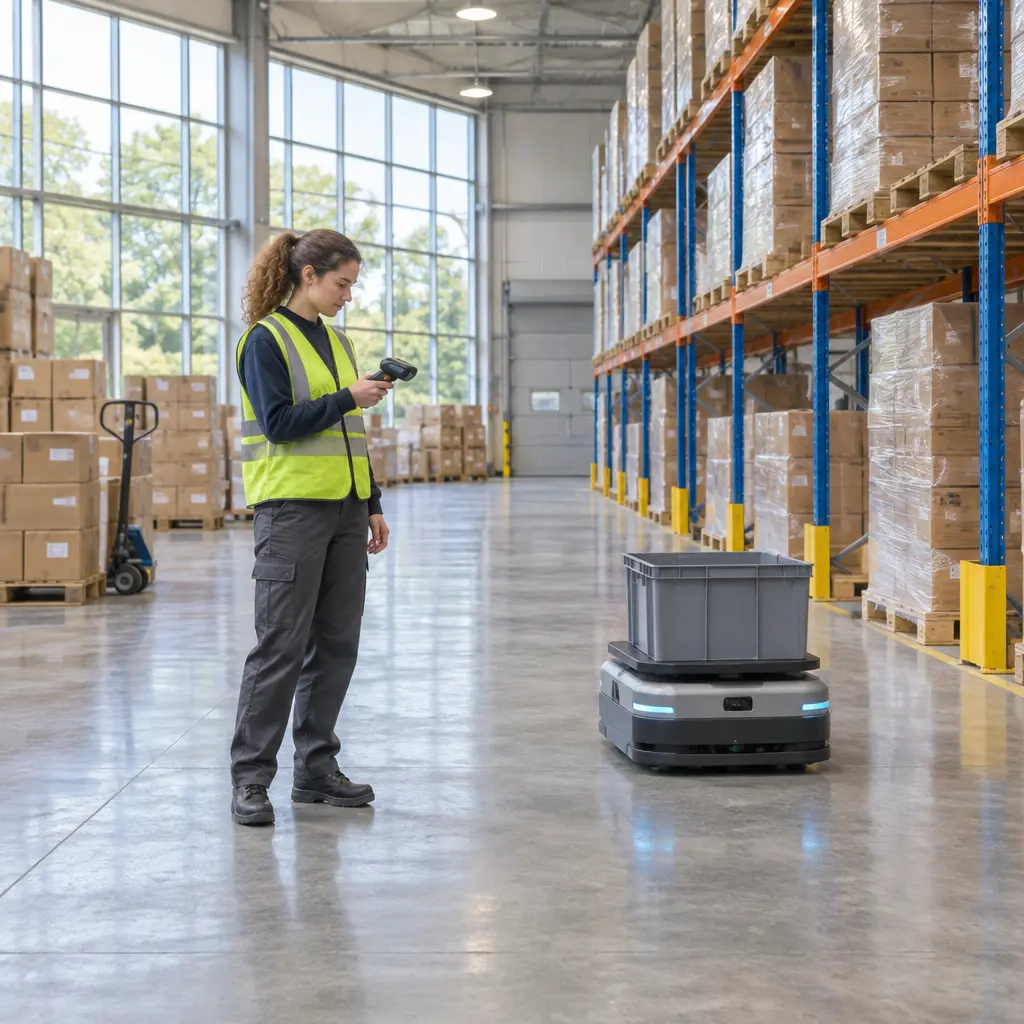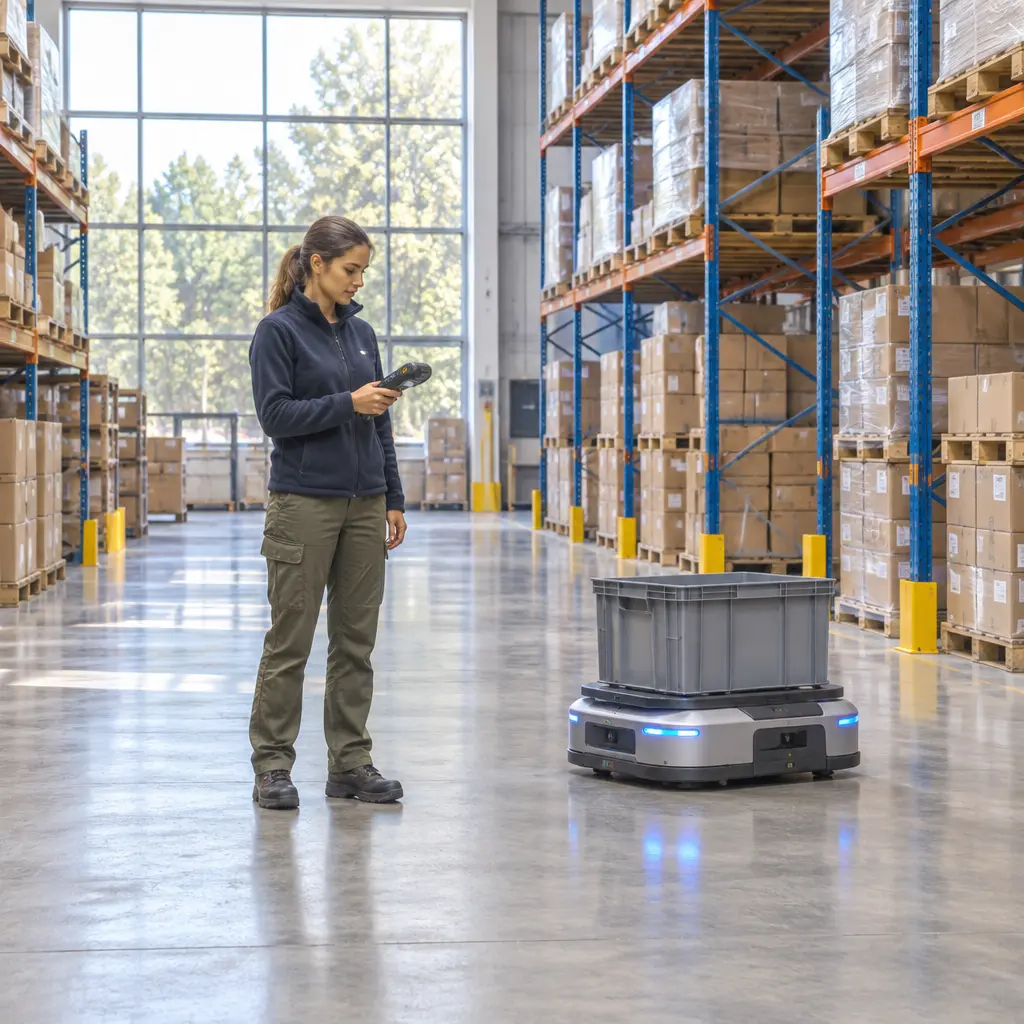
Warehouse automation adoption in Southeast Asia is the growing use of software, robotics, and automated material-handling systems to move, store, pick, and dispatch goods. Adoption is accelerating as e-commerce and regional manufacturing increase demand for faster, more reliable fulfillment, but it remains uneven: large, high-volume operations are better positioned to justify investment than smaller businesses facing high upfront costs, skills shortages, and fragmented infrastructure. The region’s opportunity lies in matching technologies—from warehouse management systems and automated storage to autonomous mobile robots—to local operating needs, while building the workforce, data capabilities, and business cases needed to scale them.
Warehouse automation adoption defines a changing Southeast Asian logistics landscape
Warehouse automation is the application of technology to execute or assist warehouse tasks, including receiving, put-away, inventory control, order picking, packing, sorting, and dispatch. The International Federation of Robotics describes industrial robots as automatically controlled, reprogrammable multipurpose manipulators used in industrial settings; in warehouses, the broader automation mix also includes conveyors, scanning systems, software, and mobile robots. Automation therefore does not necessarily mean a “lights-out” facility: many systems support people by reducing travel, repetitive handling, and errors.
Several forces make the subject especially relevant in Southeast Asia. The International Trade Administration’s country e-commerce guides describe a fast-growing but diverse digital-commerce region, while the ASEAN Secretariat’s ASEAN Key Figures and ASEAN Statistical Yearbook document the scale and variety of its economies and trade. These conditions increase pressure on distribution networks, but differences in wages, infrastructure, land availability, electricity reliability, labor supply, and digital maturity mean that the same automation model will not fit every market.
The evidence also cautions against treating adoption as a single regional statistic. Publicly available data often measure robotics in manufacturing or investment in logistics broadly, rather than warehouse automation alone. As a result, useful assessment combines market context with site-level indicators such as order lines per hour, picking accuracy, labor hours per order, inventory accuracy, throughput, and total cost of ownership.
Warehouse automation technologies span software, equipment, and robotics
A practical taxonomy groups warehouse automation into digital systems, mechanized handling, and robotic systems. These categories are complementary: a warehouse management system can coordinate inventory and work, while conveyors or robots physically move goods. The appropriate combination depends on product dimensions, order profiles, building layout, peak demand, and the cost of errors or delays.
Warehouse software creates the control layer
Warehouse management systems (WMS) direct receiving, storage, replenishment, picking, and shipping; warehouse execution systems (WES) coordinate work across people and equipment; and warehouse control systems (WCS) commonly manage automated machinery. These systems can improve inventory visibility and reduce avoidable travel, but their results depend on accurate master data, reliable scanning, integration with enterprise resource planning and transport systems, and disciplined operating processes.
For Southeast Asian operators, software-led improvements can be a lower-capital starting point than a fully automated facility. Barcode-based receiving, location control, slotting, and task interleaving may address basic inefficiencies before a business invests in robotics. The World Bank’s Logistics Performance Index highlights the importance of logistics competence, tracking, and infrastructure to trade performance, reinforcing why dependable operational data matters alongside physical equipment.
Mechanized systems improve movement and storage
Mechanized automation includes conveyors, sorters, pallet shuttles, automated storage and retrieval systems (AS/RS), and goods-to-person stations. A sorter can route parcels by destination, while AS/RS equipment stores and retrieves loads in dense configurations. These systems are most attractive where throughput is high, product flows are predictable, and space or labor constraints justify the investment.
The trade-off is reduced flexibility compared with manual operations. Fixed conveyors and high-density storage may require substantial building modifications, careful maintenance planning, and contingency arrangements for equipment downtime. In markets where facilities are leased, power or connectivity is inconsistent, or product mixes change quickly, modular equipment can be easier to adapt than a large fixed installation.
Mobile robots and picking technologies address variable workflows
Autonomous mobile robots (AMRs) navigate warehouse environments using sensors and onboard software, often transporting shelves, totes, or carts. Automated guided vehicles (AGVs) generally follow predefined routes or guidance infrastructure. Robotic arms, vision systems, and voice- or light-directed picking can further assist item handling. These technologies can reduce walking and repetitive lifting while preserving more layout flexibility than some fixed systems.
The International Federation of Robotics’ World Robotics reports provide global context on industrial robot installations, but those figures should not be presented as warehouse-specific adoption rates. For an individual operation, a pilot should verify navigation performance, safety around workers, handling of local packaging and product variation, and integration with the WMS. A staged deployment also allows managers to compare productivity and error rates against a manual baseline.
Adoption is driven by e-commerce, labor pressures, and regional supply chains
The business case for automation is strongest when several pressures converge: rising order volumes, shorter delivery expectations, labor recruitment challenges, costly errors, and limited warehouse space. Southeast Asia’s expanding digital commerce increases the need to handle smaller orders and sharper demand peaks, while manufacturers and third-party logistics providers must serve regional and international supply chains. The World Bank’s logistics research and ASEAN’s trade and economic publications provide context for the region’s growing role in connected production and distribution.
E-commerce raises the value of speed and order accuracy
E-commerce fulfillment typically involves many small orders, frequent stock updates, returns, and pronounced promotional peaks. Those characteristics can make manual picking expensive and create pressure on cutoff times. Software-guided picking, automated sorting, and goods-to-person systems can help operators process orders more consistently, particularly when inventory is spread across many stock-keeping units.
The International Trade Administration’s e-commerce market guides for countries including Indonesia, Singapore, Thailand, Vietnam, and the Philippines describe distinct national market conditions rather than a uniform regional market. That distinction matters: a high-volume urban fulfillment center may justify automation that would be uneconomic at a smaller site serving a less dense delivery area.
Labor availability and safety shape investment decisions
Automation can reduce exposure to repetitive lifting, long walking routes, and some hazardous tasks, but it does not eliminate the need for workers. Employees remain essential for exception handling, replenishment, maintenance, quality checks, and supervision. The International Labour Organization’s work on the future of work emphasizes that technology changes job tasks and skill requirements, making training and worker participation important parts of implementation.
Labor conditions vary by country and occupation, so a regional wage assumption is not a sound investment basis. Companies should use site-specific wage, turnover, overtime, absenteeism, and recruitment data. They should also assess how automation affects job quality and provide pathways into equipment operation, troubleshooting, data analysis, and maintenance.
Regional manufacturing and logistics networks create scale opportunities
The ASEAN Economic Community and regional trade agreements support cross-border commercial integration, while companies are also reassessing supply chains and production footprints. Distribution centers serving multiple countries may gain from standardized processes, shared inventory visibility, and repeatable automation designs. However, customs processes, product labeling, language requirements, and national regulations still create operational differences that systems must accommodate.
Singapore can serve as a regional logistics and technology hub, while larger domestic markets such as Indonesia, Thailand, Vietnam, and the Philippines offer different combinations of scale, labor, and infrastructure. The World Bank’s Logistics Performance Index and national investment and industry sources can help compare enabling conditions, but a site feasibility study remains necessary before choosing a technology or location.
Implementation challenges require a measured business case
The strongest adoption programs treat automation as an operating-model change rather than an equipment purchase. A valid business case should include integration, building preparation, training, maintenance, cybersecurity, downtime, and future expansion—not only the vendor’s equipment price. It should also compare automation with process redesign, better slotting, or additional shifts, which may solve the same constraint at lower cost.
Capital costs and uncertain returns can slow adoption
Automation may require substantial upfront spending on equipment, software licenses, system integration, floor reinforcement, power, and safety infrastructure. Returns depend on utilization: a system designed for peak volume may be underused during normal periods, while seasonal surges can expose capacity limits. Businesses should model multiple demand scenarios and calculate payback using realistic labor savings, throughput gains, error reduction, and maintenance costs.
A useful evaluation compares total cost of ownership over the expected life of the system. It should include financing, replacement parts, service response times, software upgrades, energy use, and the cost of disruption if a critical component fails. Smaller firms can consider robotics-as-a-service or phased deployments, while carefully reviewing contract terms, service-level commitments, data ownership, and exit options.
Infrastructure and facility constraints affect system fit
Warehouse automation depends on dependable electricity, network coverage, suitable floors, adequate clearances, and safe movement routes. Flood exposure, heat and humidity, building limitations, and uneven connectivity can also affect equipment reliability in parts of the region. The Asian Development Bank’s infrastructure and regional development research provides broader context for connectivity and investment needs, but local engineering assessments are essential for individual facilities.
Operators should examine building plans, power quality, backup generation, wireless coverage, fire protection, and maintenance access before procurement. Where conditions are uncertain, modular systems and robust manual fallback procedures can reduce operational risk.
Skills, integration, and cybersecurity are persistent hurdles
Automated facilities need workers who can interpret system alerts, maintain equipment, manage data, and coordinate vendors. A skills gap can turn a technically successful installation into an operational bottleneck. Training plans should cover operators, technicians, supervisors, IT teams, and safety personnel, with responsibilities defined before go-live.
Integration risks arise when new equipment must communicate with older enterprise systems, multiple carriers, or inconsistent product data. Connected operational technology also increases cybersecurity exposure. The National Institute of Standards and Technology’s guidance on operational technology security recommends managing risks in ways that account for the performance, reliability, and safety requirements of industrial systems. Practical safeguards include network segmentation, access controls, patch planning, backups, vendor access reviews, and incident response exercises.
Southeast Asian operators can scale adoption through pilots and partnerships
A staged approach helps organizations learn before committing to facility-wide transformation. The sequence should begin with operational data and process standardization, proceed through a targeted pilot, and scale only after performance and financial assumptions have been validated. This method is particularly useful in a region where operating conditions and market maturity differ substantially across countries and sites.
Pilot projects should test measurable operational outcomes
A pilot is a limited deployment designed to test a technology against a defined operational problem. Suitable measures include lines picked per labor hour, order cycle time, inventory accuracy, picking errors, equipment availability, safety incidents, and cost per order. Baselines should be recorded before installation, and results should be assessed across ordinary and peak conditions where possible.
For example, a third-party logistics provider could test AMRs in one picking zone before deploying them across a facility. A retailer might first introduce a WMS and barcode discipline, then add sortation after confirming that order volume and product flow support the next investment. These are implementation patterns, not claims about a specific company’s measured results.
Local partnerships can improve deployment and support
System integrators, equipment suppliers, universities, technical colleges, and logistics providers can help close gaps in design, installation, and workforce development. Local service capability is particularly important where imported equipment may have long parts lead times or limited technician coverage. Contracts should specify response times, spare-parts availability, software support, data access, and responsibilities during system outages.
Public agencies can support adoption by investing in digital and transport infrastructure, improving technical education, and providing clear standards for workplace safety and data protection. The ASEAN Secretariat, national industry agencies, and development institutions offer resources that businesses can use to understand regional policy and investment priorities.
Flexible designs protect against demand and technology changes
Modular automation allows capacity to be added in stages and can be more resilient to changes in order profiles, product ranges, and facility requirements. Open interfaces, interoperable data formats, and clear ownership of operational data reduce dependence on a single supplier. Designing for safe human-machine collaboration also enables facilities to combine automated zones with manual work where variability remains high.
Organizations should review performance regularly and update system configurations as demand changes. Automation is not a one-time transformation: software, product mixes, customer expectations, and labor markets evolve, so continuous improvement and maintenance are part of the investment.
Conclusion: Warehouse automation adoption depends on fit, skills, and execution
Warehouse automation adoption in Southeast Asia combines software, mechanized handling, and robotics to improve fulfillment, inventory control, and workplace productivity. E-commerce, supply-chain integration, labor pressures, and demand for reliable delivery create strong reasons to invest, while capital costs, infrastructure differences, skills shortages, integration, and cybersecurity can limit success.
The most durable path is to define the operational problem, establish credible baseline metrics, improve data and processes, pilot a suitable technology, and scale only when the results justify it. Warehouse leaders should consult national logistics and industry sources, assess local facilities, and involve workers and technical partners early. Further research should prioritize comparable country-level data on warehouse-specific automation, measured returns, and workforce outcomes—evidence needed to guide better decisions across the region.
Sources: International Federation of Robotics, World Robotics reports, https://ifr.org/worldrobotics/; World Bank, Logistics Performance Index, https://lpi.worldbank.org/; World Bank, Logistics Performance Index 2023, https://lpi.worldbank.org/international/global; ASEAN Secretariat, ASEAN Key Figures, https://www.aseanstats.org/publication/asean-key-figures/; ASEAN Secretariat, ASEAN Statistical Yearbook, https://www.aseanstats.org/publication/asean-statistical-yearbook/; International Trade Administration, Country Commercial Guides: eCommerce, https://www.trade.gov/country-commercial-guides; International Labour Organization, The Future of Work, https://www.ilo.org/topics-and-sectors/future-work; Asian Development Bank, Asian Economic Integration Report, https://www.adb.org/publications/series/asian-economic-integration-report; National Institute of Standards and Technology, Guide to Operational Technology (OT) Security, https://csrc.nist.gov/pubs/sp/800/82/r3/final.