
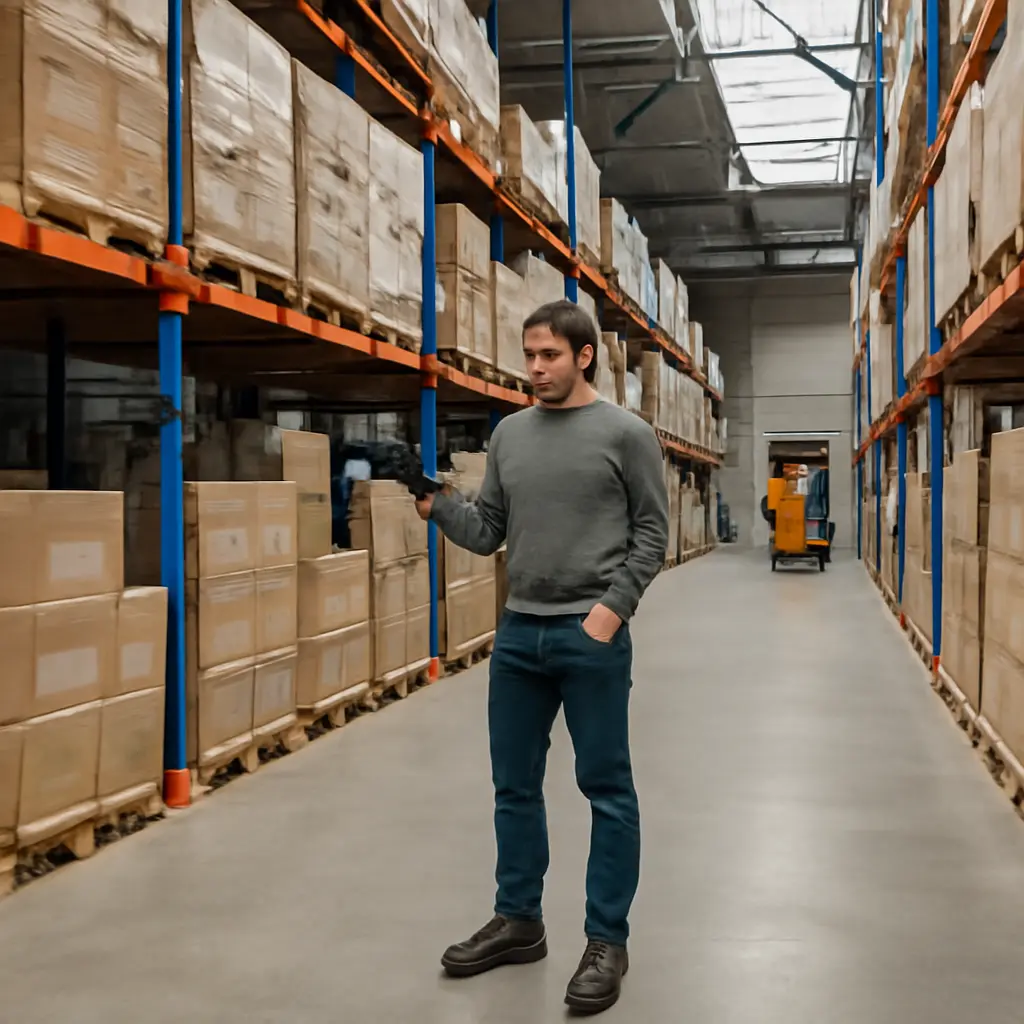
High-bay shelving changes how modern logistics work by using vertical space to increase storage capacity, support denser inventory layouts, and connect storage more directly with forklifts, conveyors, and automated systems. High-bay storage generally refers to warehouse racking designed for substantial heights—often around 10 metres or more, although thresholds vary by industry and equipment. Its value depends not simply on stacking higher, but on coordinating building design, fire protection, handling equipment, inventory data, and worker safety. These factors matter as e-commerce and supply-chain pressures raise expectations for speed and availability: the U.S. Census Bureau reported that U.S. e-commerce sales reached $1.19 trillion in 2024, representing 16.1% of total retail sales.
High-bay shelving defines vertical warehouse capacity
High-bay shelving is a form of tall storage infrastructure in which goods are held in racks or shelving systems that make substantial use of a building’s vertical clearance. In practice, the term often describes high-bay racking used with pallets, but it can also include systems for cartons, trays, or small parts. There is no single universal height cutoff: warehouse operators and equipment suppliers use the term differently, and the appropriate classification depends on the building, storage method, and material-handling equipment.
The essential attribute is the interaction between height and access. A rack may create more nominal storage positions, but usable capacity depends on aisle width, load dimensions, sprinkler clearances, floor and rack design, and the equipment needed to reach each location. The U.S. Occupational Safety and Health Administration (OSHA) requires storage materials to be secured against sliding or collapse and aisles to remain clear and unobstructed. Those requirements illustrate why high-bay design is an operational and safety decision, not merely a matter of adding taller frames.
Common forms include selective pallet racking, very-narrow-aisle (VNA) racking, drive-in or drive-through racking, pallet-flow systems, and automated storage and retrieval systems (AS/RS). Each combines height, selectivity, density, and access differently. Choosing among them begins with the warehouse’s inventory profile and throughput needs.
Selective high-bay pallet racking
Selective racking provides direct access to individual pallet positions from an aisle. It is a common choice when a facility stores many stock-keeping units (SKUs) and needs flexible access, though the aisles and access lanes use floor area that could otherwise hold storage. It suits operations where product variety and retrieval flexibility are more important than maximum density.
Very-narrow-aisle and dense storage
VNA layouts reduce aisle width and use specialized turret or articulated forklifts to access elevated loads. Drive-in and drive-through racks, by contrast, let forklifts enter storage lanes and are often suited to larger quantities of fewer product types. These systems can increase storage density, but they may reduce selectivity or require more controlled replenishment. Their suitability depends on SKU count, pallet turnover, and the consequences of delaying access to a particular load.
Automated high-bay storage
An AS/RS uses equipment such as stacker cranes, shuttles, or lifts to place and retrieve loads under software control. Automated high-bay systems can reduce routine forklift travel within storage aisles and provide repeatable location tracking, but they require suitable systems integration, maintenance planning, and contingency procedures for equipment or software outages. Automation is a distinct operating model, not an automatic consequence of building tall racks.
High-bay shelving increases capacity while changing warehouse economics
The central economic benefit is the ability to store more inventory within a given building footprint. That can be valuable where land, construction, or expansion is expensive, but the financial comparison must include the full system: racks, lifting equipment, fire protection, structural work, software, and ongoing maintenance. A taller rack alone does not guarantee lower cost per order or higher throughput.
The building itself sets important constraints. Rack loads transfer forces to the floor; building columns, clear height, roof structure, lighting, and fire-suppression design all affect the viable layout. The National Fire Protection Association’s NFPA 13 provides sprinkler-installation requirements that include provisions relevant to storage configurations and commodities. Because fire-protection requirements depend on the specific building and stored goods, operators should have the design reviewed by qualified fire-protection professionals and the authority having jurisdiction.
Capacity is not the same as usable capacity
Nominal rack positions describe how many locations appear on a plan; usable capacity reflects how many can actually be occupied while maintaining safe clearances and practical access. Operators need to account for pallet overhang, load height, aisle geometry, sprinkler and flue spaces, staging, picking, and replenishment. A layout that maximizes positions but creates congestion or inaccessible stock can undermine service levels.
Capital and operating costs must be compared together
A high-bay proposal may reduce the amount of floor area needed per stored pallet, yet require specialized trucks, operator training, rack inspections, and protection against impact. Automated systems add controls, software, maintenance, and recovery planning. A sound business case compares total cost of ownership and performance over time, including order volume, labor, energy, equipment uptime, and the cost of expansion or relocation.
Inventory policy determines whether density pays off
Storage design and inventory policy are interdependent. Fast-moving items may need locations close to dispatch or picking zones, while reserve stock can occupy less accessible positions. Slotting decisions—the assignment of products to locations—should reflect demand, product dimensions, handling rules, and replenishment frequency. High density is beneficial only when the system can retrieve the right item at the required time.
High-bay shelving reshapes material handling and fulfillment
Tall storage changes how goods travel through a facility. Operators must coordinate put-away, replenishment, picking, packing, and dispatch so that lift equipment and workers do not compete for constrained aisles. In automated sites, warehouse-management and warehouse-control software typically coordinate inventory records and equipment tasks; in manual sites, disciplined location control and traffic procedures remain essential.
The operational trade-off is between storage density and movement. Narrow aisles and elevated picks can reduce footprint but may create bottlenecks if equipment, order waves, or replenishment are poorly planned. This is especially relevant to e-commerce, where many orders contain small quantities of multiple products and require efficient picking as well as ample reserve storage.
Forklift and lifting-equipment selection
High-bay operations may use reach trucks, VNA trucks, order pickers, or guided equipment, selected according to rack height, load weight, aisle width, and required travel speed. Equipment capability must match the actual load and operating conditions; a truck’s rated capacity can change with lift height and load centre. Employers should follow manufacturer instructions and OSHA requirements for powered industrial trucks, including operator training and evaluation.
Warehouse software and inventory accuracy
A warehouse-management system (WMS) records inventory locations and directs tasks such as put-away and replenishment. In a high-bay environment, accurate scanning and location updates help prevent workers from searching at height for stock recorded in the wrong bay. Where automation is used, the WMS may exchange tasks with a warehouse-control system that coordinates machines. Software improves visibility only when processes, data, and exception handling are reliable.
Picking strategy and throughput
Picking methods include case picking, each picking, batch picking, and goods-to-person delivery. A facility can hold reserve pallets high in the rack while replenishing lower-level pick faces, separating bulk storage from order assembly. This arrangement can improve picking flow, but it introduces replenishment work that must be scheduled to avoid blocking pickers or leaving pick locations empty during busy periods.
High-bay shelving depends on safety, fire protection, and maintenance
Working at height and storing heavy loads make risk management central to high-bay operations. Rack damage, unstable pallets, collisions, falling objects, and blocked escape routes can have serious consequences. OSHA’s general material-storage requirements call for secure stacking and unobstructed aisles, while its powered-industrial-truck rules address equipment operation and training. Employers should also follow applicable building, fire, and local safety codes.
Rack inspection and load management
Rack inspection is the process of checking frames, beams, connectors, bracing, anchors, and load signs for damage or incorrect use. Forklift impacts can weaken components even when damage looks minor. Facilities should establish inspection and reporting procedures, remove unsafe areas from service when necessary, and use qualified professionals to assess structural concerns. Loads should remain within the rack’s posted capacity and be stored in a stable, compatible configuration.
Fire protection and commodity classification
Fire protection for high storage depends on factors including commodity type, packaging, rack arrangement, ceiling height, and sprinkler design. Some materials and packaging can create more demanding fire-protection conditions than others. NFPA 13 is a key standard used in sprinkler-system design, but the applicable design must be confirmed for the actual facility and local requirements; operators should not assume that an existing system remains adequate after changing rack height or stored products.
Worker training and traffic controls
Training covers safe equipment operation, pedestrian awareness, load handling, emergency response, and site-specific rules. Marked travel routes, restricted access to lift aisles, speed controls, and clear visibility at crossings help reduce conflicts. Since high-bay work can involve elevated platforms and restricted sightlines, procedures should address both routine tasks and recovery from equipment failures or dropped loads.
High-bay shelving works best when selected for the operation
A practical design starts with operational data rather than a target rack height. A retailer with thousands of SKUs and frequent small orders may prioritize pick access and replenishment, while a manufacturer holding pallet quantities of a narrower product range may value dense reserve storage. Both can use high-bay systems, but their best layouts may differ substantially.
A well-known model is the automated high-bay warehouse used in European grocery distribution, where pallet cranes and controlled storage locations support large, temperature-managed inventories. These facilities demonstrate the potential of vertical storage, but they also depend on coordinated automation, building engineering, inventory systems, and maintenance. Their performance should not be treated as a universal benchmark for smaller or less standardized operations.
A practical selection sequence
- Measure SKU count, dimensions, weights, demand variability, and order profiles.
- Confirm clear height, floor capacity, column locations, fire-protection requirements, and applicable codes.
- Compare selective, dense, and automated storage options against access needs and throughput.
- Model total cost of ownership, including equipment, labor, software, energy, maintenance, and downtime.
- Test aisle, picking, replenishment, and emergency plans before implementation, then monitor performance after launch.
Conclusion: High-bay shelving is a logistics system, not just tall racking
High-bay shelving increases the opportunity to use vertical space, but its real effect reaches across warehouse economics, material handling, inventory control, fire protection, and worker safety. Selective racks, dense storage, and automated systems each make different trade-offs; capacity gains are valuable only when stock remains accessible and operations remain safe and reliable. As fulfillment expectations rise, businesses should assess their building and inventory data, consult qualified design and safety professionals, and compare whole-system costs before investing. Further reading from OSHA and NFPA can help teams identify the relevant safety and fire-protection requirements for their specific facilities.
Sources: U.S. Census Bureau, Quarterly Retail E-Commerce Sales, Fourth Quarter 2024, https://www.census.gov/retail/mrts/www/data/pdf/ec_current.pdf; Occupational Safety and Health Administration, 29 CFR 1910.176, Handling Materials—General, https://www.osha.gov/laws-regs/regulations/standardnumber/1910/1910.176; Occupational Safety and Health Administration, 29 CFR 1910.178, Powered Industrial Trucks, https://www.osha.gov/laws-regs/regulations/standardnumber/1910/1910.178; National Fire Protection Association, NFPA 13: Standard for the Installation of Sprinkler Systems, https://www.nfpa.org/codes-and-standards/nfpa-13-standard-development/13; Occupational Safety and Health Administration, Warehousing, https://www.osha.gov/warehousing


