
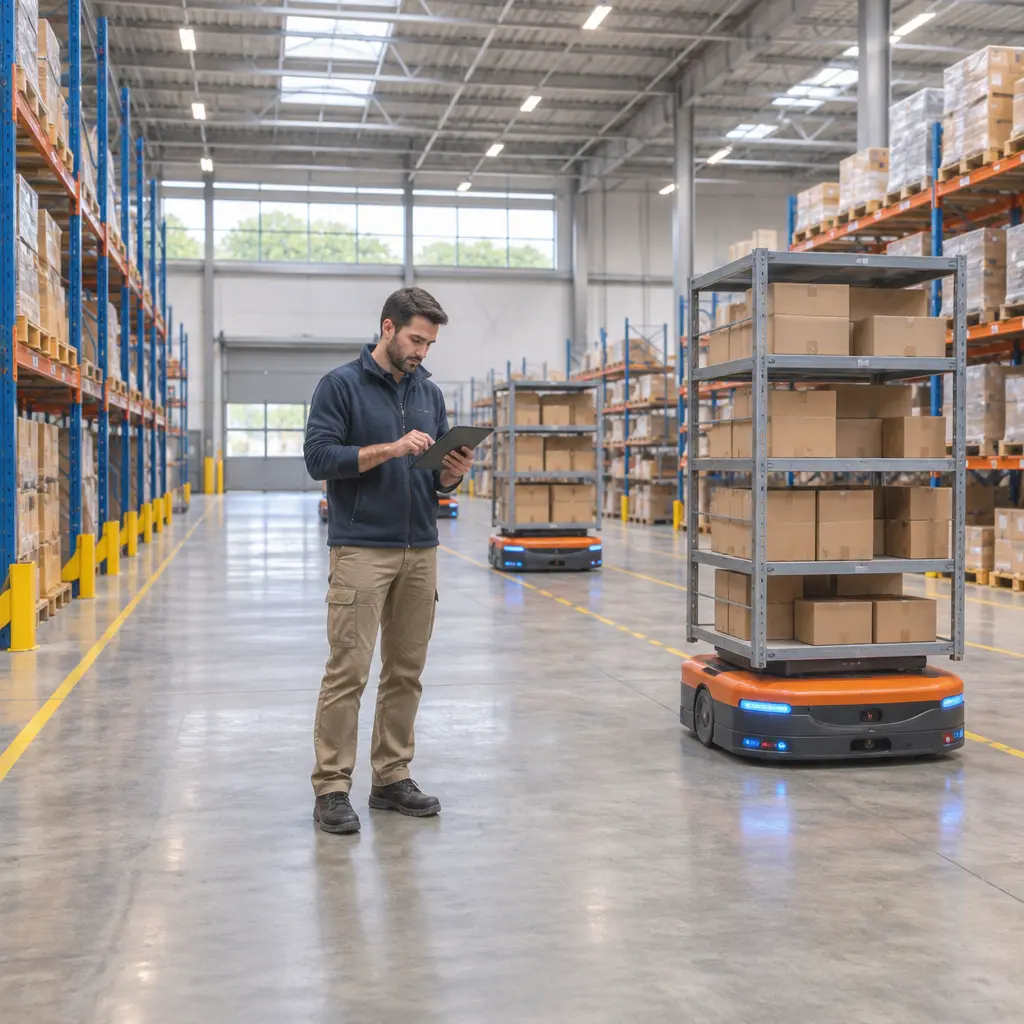
Warehouse automation combines equipment, software, and operating processes to move, store, pick, and ship goods with less manual intervention. Projects most often stumble not because automation is inherently unsuitable, but because companies underestimate process complexity, data and systems integration, workforce change, and the time needed to test and scale. The stakes are substantial: MHI and Deloitte’s 2024 industry report found that 55% of surveyed supply-chain leaders were increasing technology and innovation investment, while atis? [sic] respondents identified integration as a leading challenge. Avoiding common pitfalls therefore means defining the right business case, designing around real workflows, validating technology and data, involving employees, and managing implementation as an operational transformation—not simply an equipment purchase.
Warehouse Automation Projects Need a Measurable Business Case
A warehouse automation business case is the documented argument that a proposed system can deliver measurable operational and financial outcomes under realistic conditions. Gartner describes warehouse management systems as software that supports warehouse operations from receiving through shipping; automation projects must connect that software-led control to physical equipment, labor, inventory, and service requirements. A sound case compares the current process with expected future performance and includes capital, implementation, integration, maintenance, training, and disruption costs.
The most useful measures are specific to the operation: orders or lines picked per labor hour, order accuracy, dock-to-stock time, inventory accuracy, throughput at peak, cost per order, and on-time shipment rate. MHI and Deloitte’s 2024 report found that 55% of respondents planned to increase supply-chain technology investment, but investment intent alone does not show that a particular project will pay back. Establishing a baseline and agreed targets keeps the project tied to results rather than impressive equipment specifications.
Pitfall: Automating a Process Before Measuring It
A weak baseline makes it difficult to distinguish genuine improvement from seasonal variation or changed order mix. For example, a rise in picks per hour may conceal higher error rates, more replenishment labor, or a shift toward simpler orders. Before selecting technology, collect representative data across ordinary and peak periods, including SKU velocity, order profiles, travel distances, replenishment activity, and exceptions.
Build a business case around a range of outcomes rather than a single optimistic forecast. Include sensitivity analysis for labor availability, throughput, utilization, service levels, implementation delays, and maintenance. A pilot can validate assumptions before a full-scale commitment, but it should be designed to test the conditions that matter—such as peak volume and product variability—not just the easiest operating day.
Pitfall: Ignoring Total Cost of Ownership
Total cost of ownership is the full cost of acquiring, integrating, operating, supporting, and eventually replacing a system. Beyond equipment and software, budgets should account for facility modifications, network upgrades, systems integrators, spare parts, software subscriptions, cybersecurity, employee training, downtime, and ongoing vendor support. Comparing a solution only by purchase price or projected labor savings can hide costs that determine whether its benefits endure.
Warehouse Automation Projects Depend on Process and Technology Fit
Process and technology fit describes how well automation matches the facility’s physical layout, inventory characteristics, workflows, and required service levels. Automation includes distinct approaches—such as conveyors, automated storage and retrieval systems (AS/RS), autonomous mobile robots (AMRs), automated guided vehicles (AGVs), and goods-to-person picking. These are not interchangeable: each suits different combinations of throughput, storage density, SKU profile, order structure, and flexibility needs.
The International Federation of Robotics reported that 4,281,585 industrial robots were operating in factories worldwide in 2023. That figure reflects industrial robots broadly, not warehouse systems alone; it nevertheless illustrates the scale of robotics adoption and why choosing technology by trend rather than operational fit is a risky shortcut. The right design starts with requirements and constraints, then evaluates candidate systems against them.
Pitfall: Choosing Technology Before Defining the Workflow
A technology-first project can force established workflows into a system that was never designed for the facility’s actual order mix. An AMR may reduce walking in a flexible operation, while a high-throughput conveyor can suit stable, repetitive flows; an AS/RS may increase storage density but require carefully managed replenishment and exception handling. The selection should follow process mapping, demand analysis, and scenario testing—not vendor demonstrations alone.
Map the full material flow from receiving and put-away through storage, replenishment, picking, packing, and shipping. Identify bottlenecks and handoffs, then test how the proposed equipment changes each step. Include edge cases such as damaged cartons, short picks, blocked routes, battery charging, returns, and equipment downtime. These exceptions often determine real-world performance more than the nominal cycle time.
Pitfall: Overlooking Facility Constraints and Future Variability
Facility fit includes clear heights, floor condition and load capacity, aisle widths, fire protection, charging locations, dock access, wireless coverage, and safe pedestrian routes. A solution that fits a CAD drawing may still conflict with utilities, building codes, traffic patterns, or maintenance access. Verify constraints through site surveys and engineering review before freezing the design.
Design for reasonable change as well as current demand. Product assortment, packaging, order profiles, and peak volumes can shift after deployment. The U.S. Census Bureau’s quarterly e-commerce data offers useful context for the continuing scale of online retail, but each facility should use its own demand history and forecasts rather than treat national trends as a substitute for local planning. Test capacity and flexibility under plausible growth and peak scenarios.
Warehouse Automation Projects Require Reliable Data and Integration
Systems integration is the coordination of software and equipment so warehouse transactions, inventory states, and work instructions remain consistent across platforms. In a typical automated operation, an enterprise resource planning (ERP) system exchanges business data with a warehouse management system (WMS), which may coordinate with a warehouse control system (WCS), robotics software, conveyors, sorters, and scanners. Poor integration can cause delays, duplicate work, incorrect inventory, or equipment waiting for incomplete instructions.
Integration remains a recognized industry challenge. MHI and Deloitte’s 2024 report identifies integration with existing systems as a major obstacle to supply-chain technology adoption. The precise issue in a warehouse may be outdated interfaces, inconsistent item records, unclear ownership of inventory updates, or insufficient testing between vendors. Naming an integration owner and defining how each system handles transactions and failures reduces these risks.
Pitfall: Treating Data Cleanup as a Later Task
Master data is the core reference information systems use to identify products, locations, units of measure, packaging, and handling rules. Inaccurate dimensions or weights can disrupt storage assignment, cartonization, robotic handling, and shipping decisions. Before implementation, audit SKU and location records, standardize units, identify duplicates, and establish data ownership and change-control procedures.
Validate operational data against physical reality. Sample inventory locations, measure representative products, and check barcodes, labels, and packaging configurations. A clean migration plan should specify which system is authoritative for each field, how open transactions are handled, and how discrepancies are resolved during cutover.
Pitfall: Under-testing Interfaces and Failure Scenarios
A successful demonstration of each component does not prove that the end-to-end system works. Test normal transactions and exceptions across receiving, replenishment, picking, packing, shipping, and inventory adjustment. Include interface delays, duplicate messages, network interruptions, unavailable equipment, and recovery after a system restart. Define who diagnoses each failure and how work continues safely while systems recover.
Use staged testing: component checks, interface tests, end-to-end process tests, performance tests, and user acceptance testing. Establish measurable acceptance criteria before testing begins, including throughput, transaction accuracy, recovery time, and exception handling. Maintain an integration and issue log with accountable owners so problems are resolved rather than deferred into go-live.
Warehouse Automation Projects Succeed Through Workforce and Change Management
Change management is the planned process of preparing employees, supervisors, and support teams for new roles, workflows, and technologies. Automation can change how people receive work, move through the building, handle exceptions, and maintain equipment. It does not remove the need for skilled employees; it often shifts work toward monitoring, replenishment, troubleshooting, safety, and system support.
The U.S. Bureau of Labor Statistics projects employment of material moving machine operators to grow 4% from 2023 to 2033, with about 665,000 openings per year on average due to growth and replacement needs. This broader occupational data is not a direct measure of warehouse automation’s effect, but it underscores that material movement remains a significant workforce function. Projects should plan for recruitment, training, and role transitions alongside equipment installation.
Pitfall: Involving Employees Only at Go-Live
Frontline employees and supervisors understand practical details that may be missing from process diagrams, including common exceptions, congestion points, and informal workarounds. Involving them during discovery and design can reveal hazards and usability issues early. It also helps explain why workflows are changing and gives employees a meaningful role in shaping the future operation.
Create role-based training for operators, maintenance staff, supervisors, IT teams, and emergency responders. Use realistic practice with normal tasks and exception scenarios, then verify competence rather than relying on attendance alone. Schedule refresher training and provide clear job aids for system recovery, safe manual work, and escalation.
Pitfall: Treating Safety as a Final Approval Step
Safety-by-design means identifying and reducing hazards throughout system selection, facility design, installation, and operation. Automated vehicles, conveyors, robotic cells, and pedestrian traffic can introduce risks that require guarding, separation, signage, emergency stops, lockout procedures, and clear operating rules. OSHA’s machine-guarding requirements emphasize protecting workers from hazards such as rotating parts, points of operation, and flying material; applicable requirements should be assessed for the specific equipment and worksite.
Conduct risk assessments with employees, safety professionals, engineering teams, and vendors before commissioning. Test emergency stops and recovery procedures, mark pedestrian and vehicle routes, and ensure maintenance teams can isolate energy sources. Reassess safety when layouts, software, traffic patterns, or operating procedures change.
Warehouse Automation Projects Need Phased Implementation and Ongoing Governance
Implementation governance is the set of decisions, responsibilities, controls, and performance reviews used to take a project from design to stable operations. A phased approach—discovery, design, pilot, testing, commissioning, and optimization—helps teams learn before expanding. It also makes dependencies visible: a facility modification, data migration, interface, or training gap can delay equipment that is otherwise ready.
Forrester’s 2023 Total Economic Impact study commissioned by Amazon Web Services reported that 74% of surveyed organizations experienced at least one unsuccessful cloud migration attempt. That study concerns cloud migrations, not warehouse automation, so it should not be read as an automation failure rate. It does, however, illustrate the broader implementation lesson that technology transitions can face repeated obstacles when planning, skills, and change management are insufficient.
Pitfall: Rushing Cutover Without a Recovery Plan
Cutover is the transition from the old operating process to the new system. A rushed cutover can leave orders, inventory, or equipment in inconsistent states. Prepare a detailed cutover plan that defines inventory reconciliation, transaction freeze windows, staffing, vendor coverage, decision authority, communication channels, and rollback or contingency options.
Commission in controlled stages where practical. Confirm that safety systems, software interfaces, operating procedures, and support coverage are ready before increasing volume. Track issues and operational performance daily during ramp-up, and define escalation thresholds that trigger additional support or a pause in expansion.
Pitfall: Declaring Success at Installation
Installation completion is not the same as operational success. A system must meet agreed service, quality, safety, and cost targets under normal and peak conditions, with employees able to operate and maintain it. Monitor both leading indicators—such as training completion, unresolved defects, and downtime—and lagging indicators such as order accuracy, throughput, and cost per order.
Set a post-launch review cadence with operations, IT, engineering, safety, and vendors. Compare actual results with the original baseline, investigate unexpected costs, and prioritize improvements using evidence. A chart of baseline versus post-launch throughput, accuracy, downtime, and labor hours by week can make ramp-up trends visible and show whether the system is stabilizing.
Conclusion: Avoiding Warehouse Automation Project Pitfalls
Warehouse automation projects are more likely to deliver durable results when they begin with a measurable business case, match technology to real workflows and facility conditions, prepare reliable data and integrations, involve and train the workforce, and use phased implementation with continuing governance. The core lesson is to treat automation as a change to the entire operating system of the warehouse—not simply an equipment installation.
Before approving a project, establish baseline metrics, test assumptions with representative operating data, involve employees and safety experts, and agree on acceptance and recovery criteria. For further guidance, review current MHI research, OSHA requirements, and relevant vendor documentation, then validate recommendations against the facility’s own operating conditions.
Sources: MHI and Deloitte, 2024 MHI Annual Industry Report, https://www.mhi.org/publications/report; International Federation of Robotics, World Robotics 2024, https://ifr.org/ifr-press-releases/news/record-of-4-million-robots-working-in-factories-worldwide; U.S. Census Bureau, Quarterly Retail E-Commerce Sales, https://www.census.gov/retail/mrts/www/data/pdf/ec_current.pdf; U.S. Bureau of Labor Statistics, Occupational Outlook Handbook: Material Moving Machine Operators, https://www.bls.gov/ooh/transportation-and-material-moving/material-moving-machine-operators.htm; Occupational Safety and Health Administration, 29 CFR 1910.212, General Requirements for All Machines, https://www.osha.gov/laws-regs/regulations/standardnumber/1910/1910.212; Forrester Consulting, The Total Economic Impact of AWS Migration Acceleration Program, commissioned by Amazon Web Services, 2023, https://aws.amazon.com/migration-acceleration-program/.


