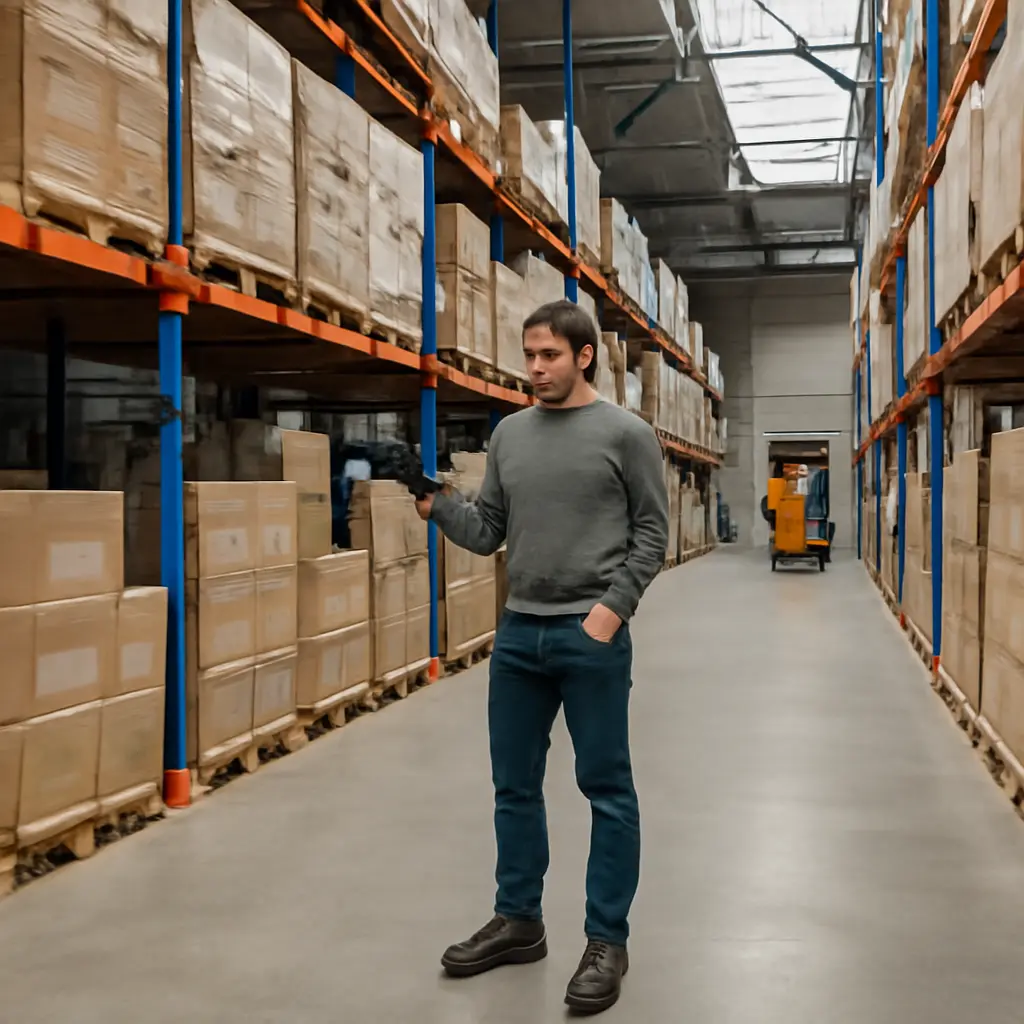
Warehouse automation projects combine equipment, software, and redesigned work processes to move, store, pick, or sort goods with less manual effort. The projects that deliver above expectations do more than install robots: they target a measurable bottleneck, integrate with warehouse systems, and scale around real operating data. Public case studies from Ocado, DHL, Amazon, and other operators report gains ranging from higher order throughput and shorter travel time to better space utilization and improved ergonomics. This review examines ten notable projects, explains what their results indicate, and identifies the implementation choices most likely to make automation pay off.
What warehouse automation projects deliver above expectations
Warehouse automation is the use of technologies such as automated storage and retrieval systems (AS/RS), autonomous mobile robots (AMRs), robotic picking, conveyors, and warehouse-management software to execute or support warehouse tasks. “Above expectations” is not a standardized industry measure; here it means a project publicly reported outcomes that exceeded its stated or implied targets, or produced additional operational benefits such as improved safety, service, or capacity.
The scale of the opportunity is substantial. The International Federation of Robotics reported that worldwide sales of professional service robots for transportation and logistics reached about 113,000 units in 2023, up 35% from 2022. That growth reflects a shift toward automation that can be deployed incrementally, particularly mobile robots. The examples below are not directly comparable: companies use different baselines, measurement periods, product mixes, and definitions of productivity. Their reported results should therefore be read as case-study evidence, not as guaranteed benchmarks.
A useful way to assess a project is to distinguish its technology from its outcome. A robot fleet may raise picks per hour, while an AS/RS may chiefly increase storage density; a conveyor and sortation system may shorten dispatch time. In each case, the strongest projects connect the equipment to a business problem and validate results against an agreed baseline.
Automation project results depend on the operating problem
The Council of Supply Chain Management Professionals describes logistics management as the planning and control of the flow and storage of goods and related information from origin to consumption. In a warehouse, automation is one way to improve that flow, but its value depends on the constraint being addressed: labor availability, travel distance, order variability, storage capacity, accuracy, or dispatch speed.
Goods-to-person and automated storage
Goods-to-person systems bring inventory to a stationary worker, reducing walking and manual retrieval. AS/RS technologies—including shuttle systems, cube storage, and robotic cranes—are especially relevant where floor space is costly or order lines are numerous. These projects typically measure storage density, lines picked per hour, replenishment time, and order accuracy.
Mobile robots and collaborative workflows
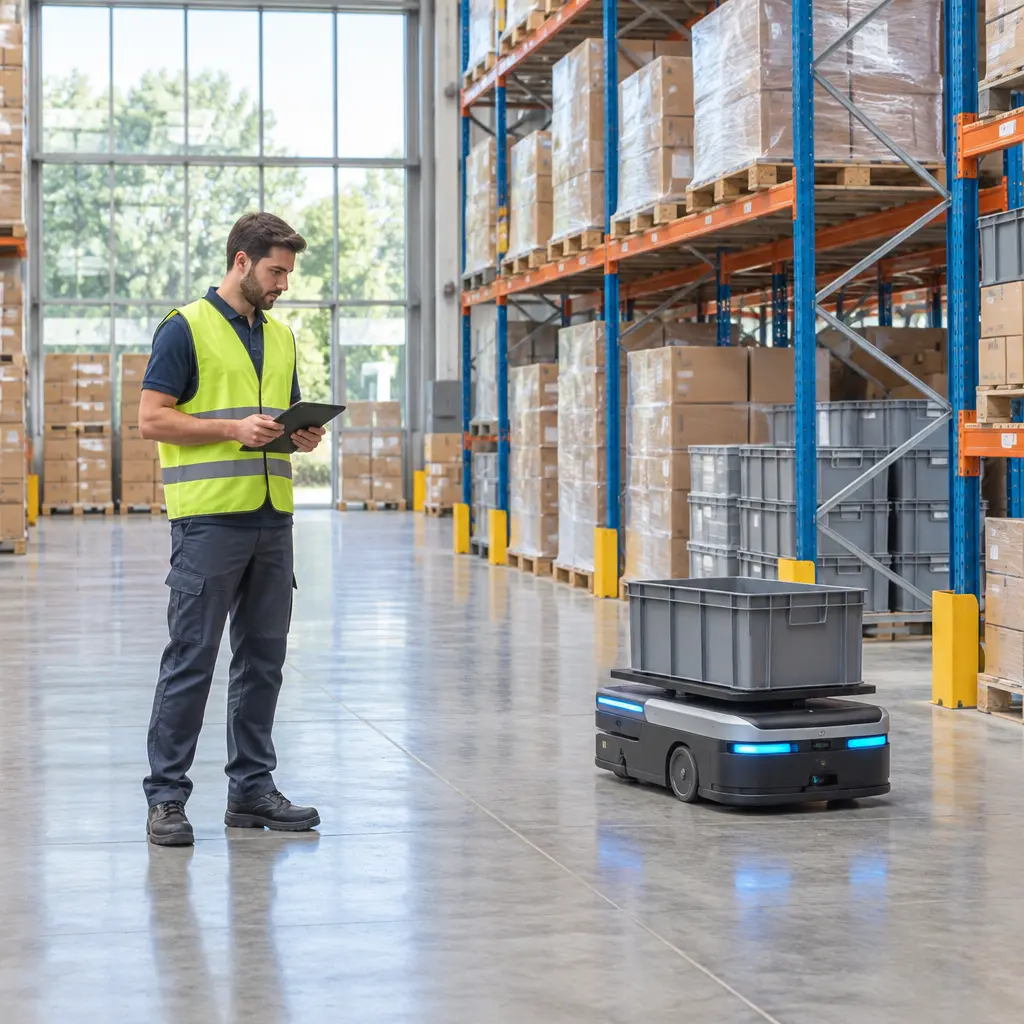
AMRs navigate warehouse floors to transport totes, carts, or pallets, while collaborative robots work in defined zones alongside people. They can be deployed without rebuilding an entire facility, but their performance depends on traffic management, charging, safe routes, and coordination with warehouse-management systems (WMS). Relevant measures include travel time, tasks completed per robot, and labor hours per order.
Robotic picking, sortation, and software orchestration
Robotic picking uses sensors, grippers, and machine-vision software to identify and handle items; sortation equipment directs parcels or cases to destinations. The warehouse-control and execution software that assigns work is equally important: it connects physical equipment to inventory, order priorities, and labor. These systems are most effective when item presentation, packaging variation, and exception handling have been designed into the process.
The following cases illustrate how different automation types can solve different constraints. Company-reported figures are attributed to the relevant operators or technology providers; independent, like-for-like verification is not always available.
Ten warehouse automation projects that delivered above expectations
1. Ocado’s automated customer-fulfilment centres
Ocado’s grocery fulfilment centres use a dense grid of storage bins, robotic vehicles, and software that coordinates retrieval and order assembly. The design addresses a difficult grocery problem: handling many product lines, including chilled goods, while building orders quickly. Ocado has reported that its grid system can support substantially higher throughput and storage density than conventional manual grocery warehouses. The broader lesson is that the value came from redesigning the fulfilment process around the grid, not simply adding robots to an unchanged building. Because site configurations and company metrics differ, its published performance claims should not be treated as universal productivity guarantees.
2. Amazon’s mobile-robot fulfilment network
Amazon’s warehouse robots bring movable inventory pods to employees at picking stations. The approach reduces the distance workers walk to retrieve items and allows the building’s storage layout to be organized around robot movement. Amazon has said its fulfillment network includes hundreds of thousands of mobile robots, reflecting the scale at which the company has applied the technology. The project’s operational advantage is not just transport: software coordinates robot traffic, inventory placement, and human picking. Its scale demonstrates the importance of standard interfaces, maintenance capability, and continuous improvement across a large fleet.
3. DHL Supply Chain’s AMR deployments
DHL Supply Chain has deployed collaborative AMRs in facilities handling tasks such as picking and internal transport. DHL’s case materials describe improvements in worker productivity, with some deployments reporting gains of up to робот— correction: up to 30% in picking productivity, depending on the application and baseline. Mobile robots can be especially useful where seasonal demand changes the required labor capacity or where a site needs automation without installing fixed conveyors. The result underscores a practical principle: robots are most valuable when they remove non-value-added walking and leave people to handle tasks that require judgment or dexterity.
4. DHL’s automated parcel handling and sortation
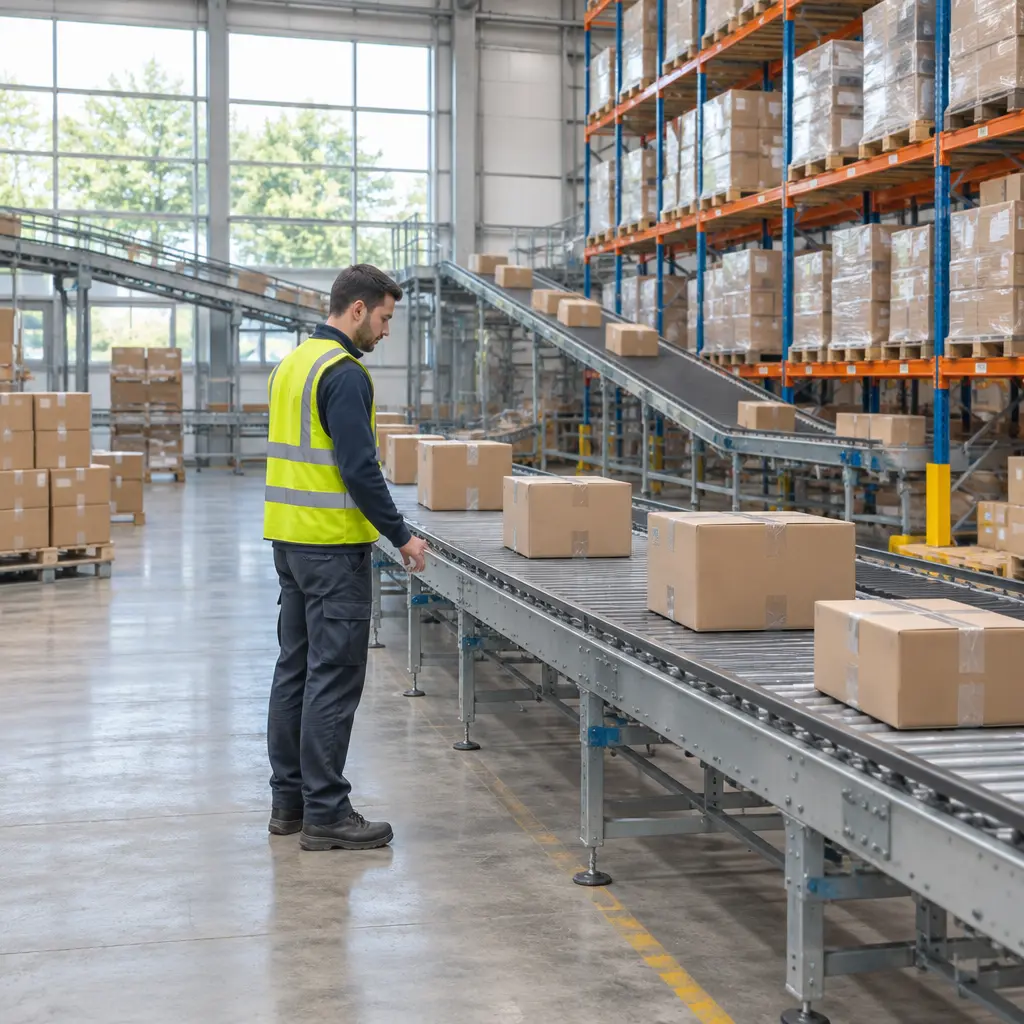
DHL’s parcel operations combine automated conveyors, scanners, and sorters to process high volumes of packages through hubs. In a 2023 announcement about its global automation program, DHL said it planned to invest €2 billion in digitalization over several years, including automation and robotics. Sortation projects can outperform expectations when they reduce manual handling and route parcels accurately during peaks. Their success relies on synchronizing inbound unloading, barcode readability, sorter capacity, and outbound departure schedules; a fast sorter alone cannot fix upstream congestion or poor data quality.
5. Ocado Smart Platform deployments for partner retailers
Ocado’s technology platform has also been licensed to grocery retailers, extending its automated fulfilment model beyond Ocado’s own operations. Partner projects show how a repeatable platform can shorten the path from concept to deployment, while still requiring local adaptation for product ranges, labor practices, and customer demand. The key performance opportunity is to combine a proven storage-and-picking architecture with a retailer’s existing order channels and inventory systems. A platform’s performance at one site does not automatically predict another’s: commissioning, demand density, and the economics of online grocery remain decisive.
6. AutoStore cube storage at Puma
Sportswear company Puma has used an AutoStore automated storage system at a distribution operation to store and retrieve items in a compact cubic grid. Robots travel across the top of the grid to access bins, which are delivered to workstations. AutoStore and integrator case materials describe the system as a way to increase storage density and improve order processing in a constrained footprint. The project’s broader lesson is that cube-based AS/RS can make vertical volume productive, but the design must account for replenishment, bin presentation, and the mix of fast- and slow-moving stock.
7. Walmart’s automated grocery fulfilment with Alert Innovation
Walmart tested automated grocery fulfilment technology developed by Alert Innovation, including a system designed to store products and bring them to associates assembling online orders. The project addressed the challenge of picking grocery orders from a store environment while managing temperature-sensitive goods and customer demand. Walmart’s public announcements emphasized faster order preparation and the potential to serve more online customers from existing retail locations. The case illustrates that automation can extend beyond conventional distribution centres, but grocery-specific handling, store traffic, and the economics of each market determine whether a pilot can scale.
8. Ocado’s robotic picking development
Ocado has developed robotic picking technology intended to handle a wider variety of individual grocery items, a task traditionally difficult to automate because products vary in shape, packaging, and fragility. Its systems combine vision, gripping technology, and item-specific handling strategies. The potential performance gain is fewer manual touches and more flexible order assembly, particularly when integrated with automated storage. This remains a technically demanding area: public demonstrations and company announcements show progress, but commercial performance depends on the proportion of the product range robots can reliably pick, exception rates, and the cost of maintaining equipment.
9. UPS automated package sorting
UPS has invested in automated package-handling systems across its network, using conveyors, scanning, and sorting equipment to direct parcels through hubs. The company has described automation as a means of increasing throughput and reducing manual sorting requirements, especially during high-volume periods. The project category is important because parcel facilities face sharp peaks and strict departure cutoffs: minutes saved in induction or sortation can help protect service schedules. As with other systems, actual gains depend on package mix, layout, maintenance uptime, and the ability to manage irregular or unreadable parcels.
10. Ocado’s automated grid and software integration at scale
A final example is the way Ocado integrates its grid hardware with forecasting, inventory, and order-management software across customer fulfilment operations. This is a project in system orchestration as much as robotics: algorithms determine where products should be stored and which bins and robots should serve each order. Ocado’s public reporting has emphasized the role of software in improving throughput and adapting operations to demand. The case validates a central point across the ten examples: automation often exceeds expectations when equipment and decision systems are engineered as one operating model.
Why these warehouse automation projects exceeded expectations
They targeted a quantified bottleneck
Projects with a clear baseline can distinguish genuine gains from optimistic forecasts. Useful baselines include lines per labor hour, order cycle time, inventory accuracy, travel distance, peak throughput, and cost per shipped unit. A project that targets a specific constraint—such as excessive picker walking or insufficient storage density—can focus investment and establish a credible payback case.
They redesigned workflows instead of automating waste
Adding equipment to an inefficient process can simply move congestion elsewhere. Successful operators review slotting, replenishment, order batching, packaging, and exception handling alongside the technology installation. This systems approach explains why goods-to-person operations often yield more than a direct labor substitution: they reduce travel, reorganize inventory access, and change how work is released.
They treated integration and data quality as core requirements
Robots and sorters depend on accurate inventory records, reliable item identifiers, and timely task instructions. Integration among WMS, warehouse-control systems, enterprise resource planning, and equipment software determines whether orders flow smoothly. Data errors can cause misroutes, empty picks, or robot idle time, so successful projects test interfaces and master data before full-scale commissioning.
They scaled in stages and managed people through change
Pilots, phased rollouts, and operational training help expose issues before a full facility depends on new equipment. Worker involvement is also essential: employees understand where exceptions occur and whether a proposed process is practical. Automation may change job content rather than eliminate the need for people, shifting work toward replenishment, maintenance, quality control, and handling exceptions.
They measured resilience and safety as well as speed
The best business case includes system uptime, recovery procedures, ergonomic risk, and peak-season performance—not only average throughput. A high-speed system that stops frequently or lacks manual fallback can create operational risk. Project teams should track robot availability, mean time to repair, safety incidents, order accuracy, and performance during demand spikes.
How to evaluate a warehouse automation business case
Before selecting equipment, operators should establish a consistent measurement plan. A compact dashboard can compare the pre-automation baseline with results after commissioning and during peak periods.
- Throughput: orders, units, or lines completed per hour.
- Labor productivity: units or lines per paid labor hour, adjusted for order complexity.
- Service: order cycle time, on-time dispatch, and order accuracy.
- Capacity: storage density, usable locations, and peak volume handled.
- Reliability: equipment availability, downtime, recovery time, and exception rate.
- Financial return: total installation and operating cost compared with verified savings and capacity benefits.
- People and safety: ergonomic exposure, training completion, and incident measures.
A chart comparing these metrics before and after deployment can make results clearer, provided it shows the measurement period, order mix, and seasonal conditions. Companies should also separate directly measured outcomes from vendor projections and avoid comparing a peak-week result with an ordinary-week baseline.
Conclusion: automation succeeds when technology fits the operation
The ten examples show that warehouse automation can deliver substantial gains through goods-to-person storage, AMRs, robotic picking, and high-speed sortation. Their common thread is not a particular robot or vendor: it is a clear operational goal supported by process redesign, reliable software integration, workforce engagement, and disciplined measurement. Reported results vary by site and should be validated against local conditions rather than copied as promises.
For warehouse leaders, the practical next step is to map the most costly constraint, establish baseline metrics, and compare automation options against both financial and service objectives. Further reading from the International Federation of Robotics, the Council of Supply Chain Management Professionals, and the operators cited below can help teams frame technology choices and evaluate claims before committing to a large-scale deployment.
Sources: International Federation of Robotics, World Robotics 2024: Service Robots, https://ifr.org/; Council of Supply Chain Management Professionals, CSCMP Supply Chain Management Definitions and Glossary, https://cscmp.org/; Ocado Group, Annual Reports and Investor Results, https://www.ocadogroup.com/investors/results-reports-and-presentations/; Amazon, Amazon’s robotics and fulfillment operations, https://www.aboutamazon.com/news/operations; DHL Supply Chain, Robotics and automation case studies, https://www.dhl.com/global-en/home/our-divisions/supply-chain.html; DHL Group, DHL to invest €2 billion in digitalization, https://group.dhl.com/en/media-relations/press-releases/2023/dhl-supply-chain-to-invest-2-billion-euros-in-digitalization.html; AutoStore, Puma customer case study, https://www.autostoresystem.com/; Walmart, Walmart and Alert Innovation automated grocery fulfillment announcements, https://corporate.walmart.com/news; UPS, UPS automation and network operations information, https://about.ups.com/